Architecture
Layers
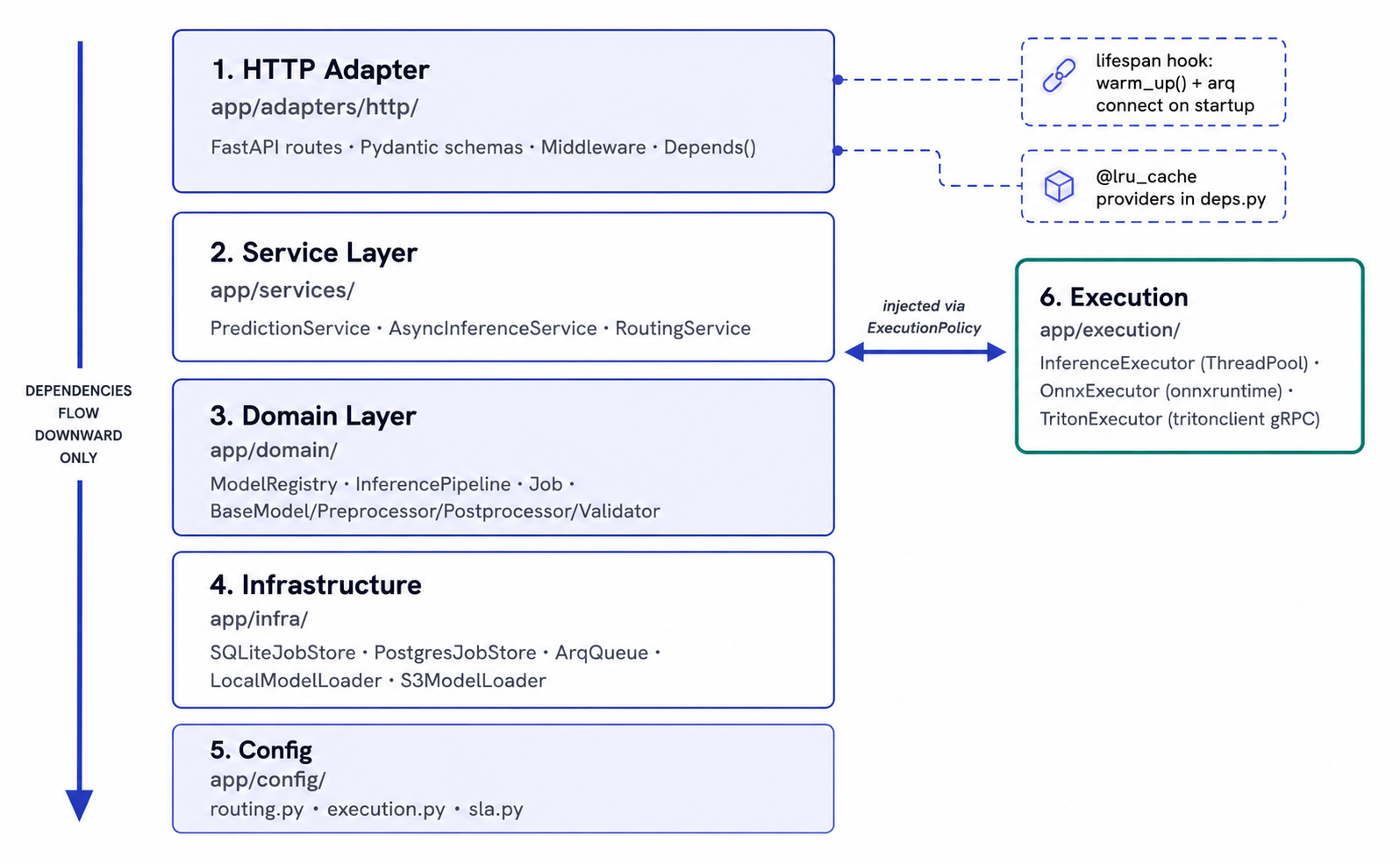
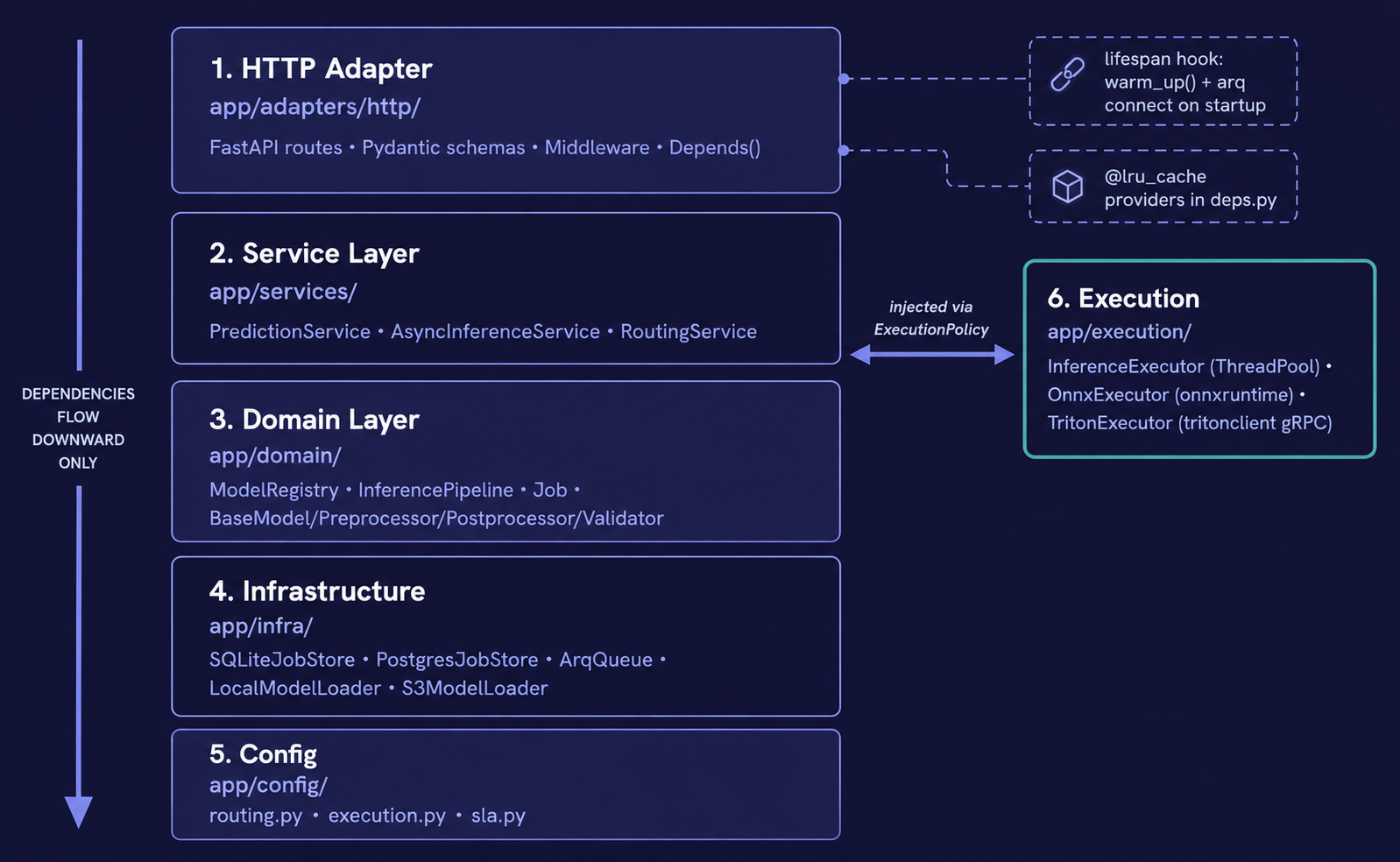
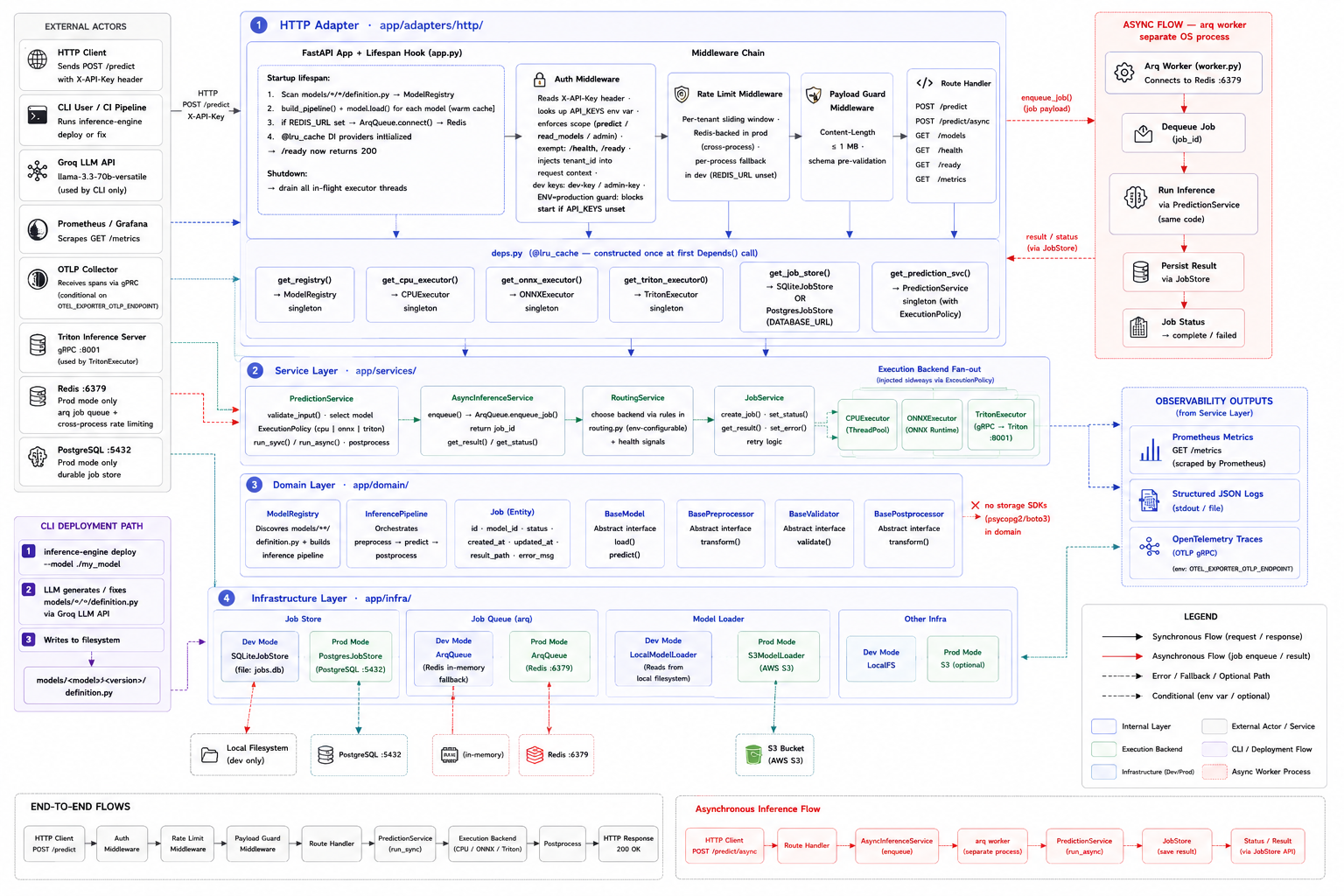
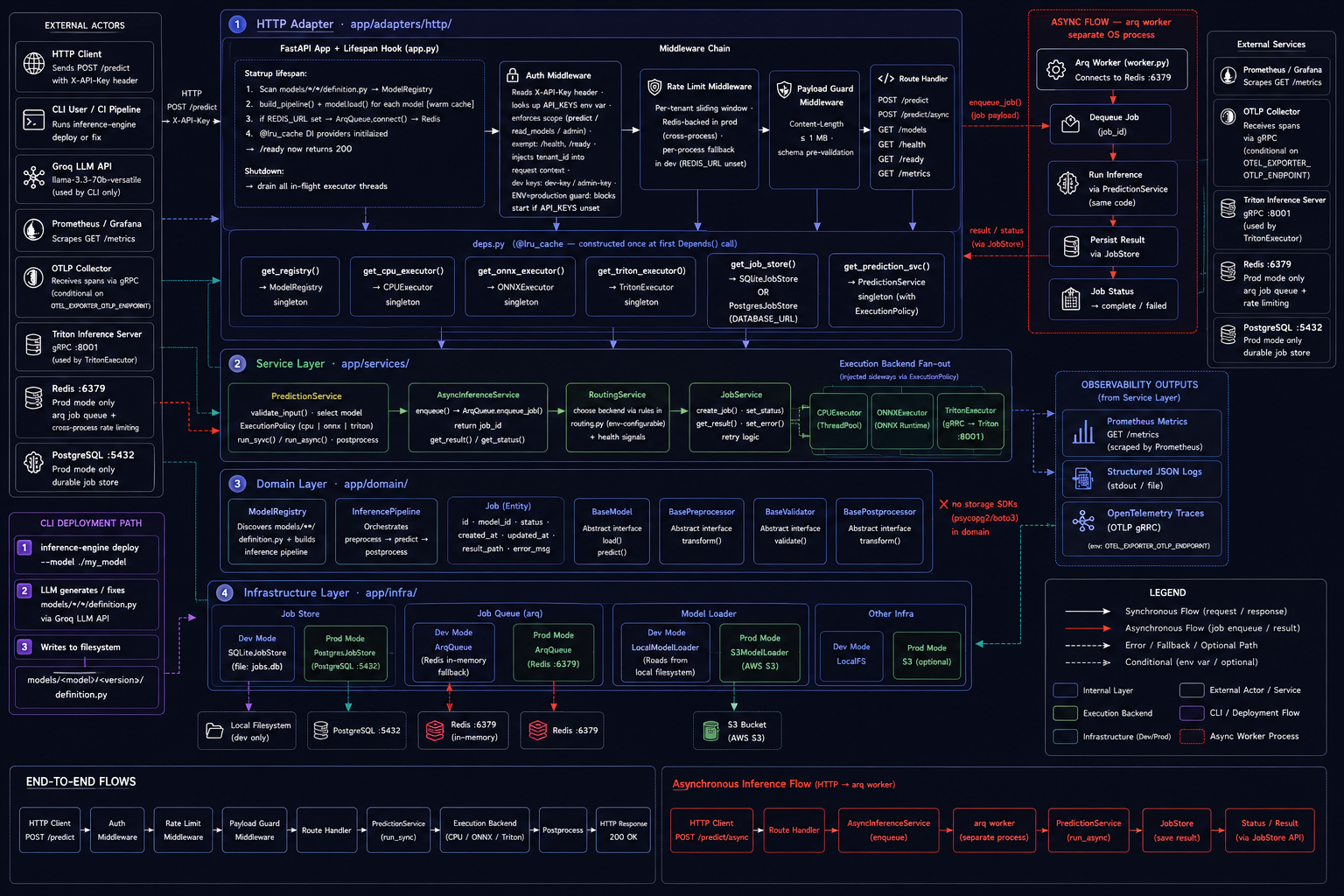
The engine is split into four layers. Each layer only depends on the layer below it — never above.
The execution layer is injected into the service layer via ExecutionPolicy — it is a pluggable runtime concern, not a separate tier.
Layer responsibilities
| Layer | Package | Knows about |
|---|---|---|
| HTTP Adapter | app/adapters/http/ |
FastAPI, Pydantic, HTTP status codes |
| Service | app/services/ |
Domain objects, executors, metrics, logging |
| Domain | app/domain/ |
Pure Python — no HTTP, no storage SDKs |
| Infrastructure | app/infra/ |
psycopg2, arq, boto3 |
| Execution | app/execution/ |
ThreadPoolExecutor, onnxruntime, tritonclient |
| Config | app/config/ |
Routing rules, executor assignments, SLA timeouts |
Invariants
These rules must never be broken:
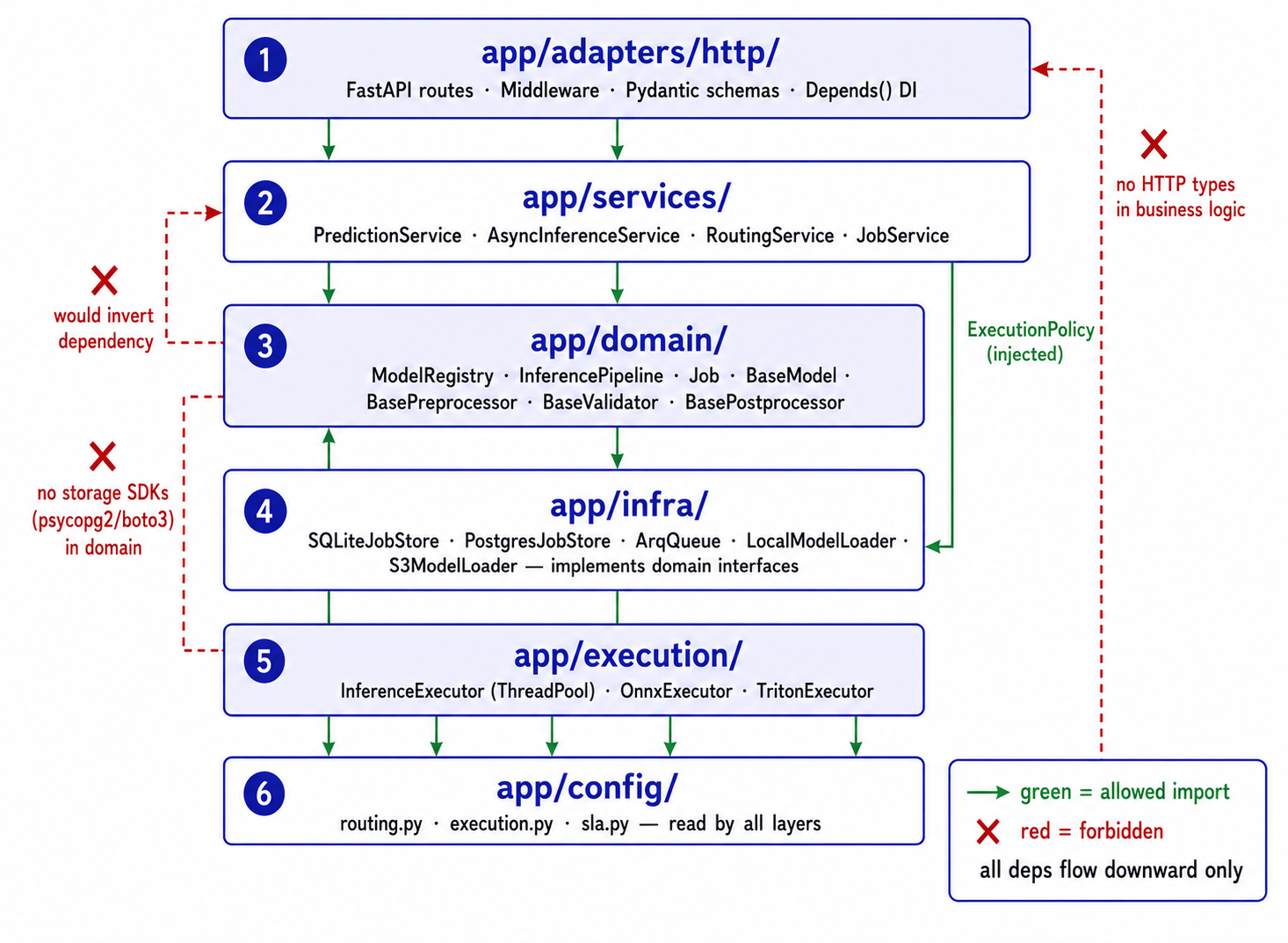
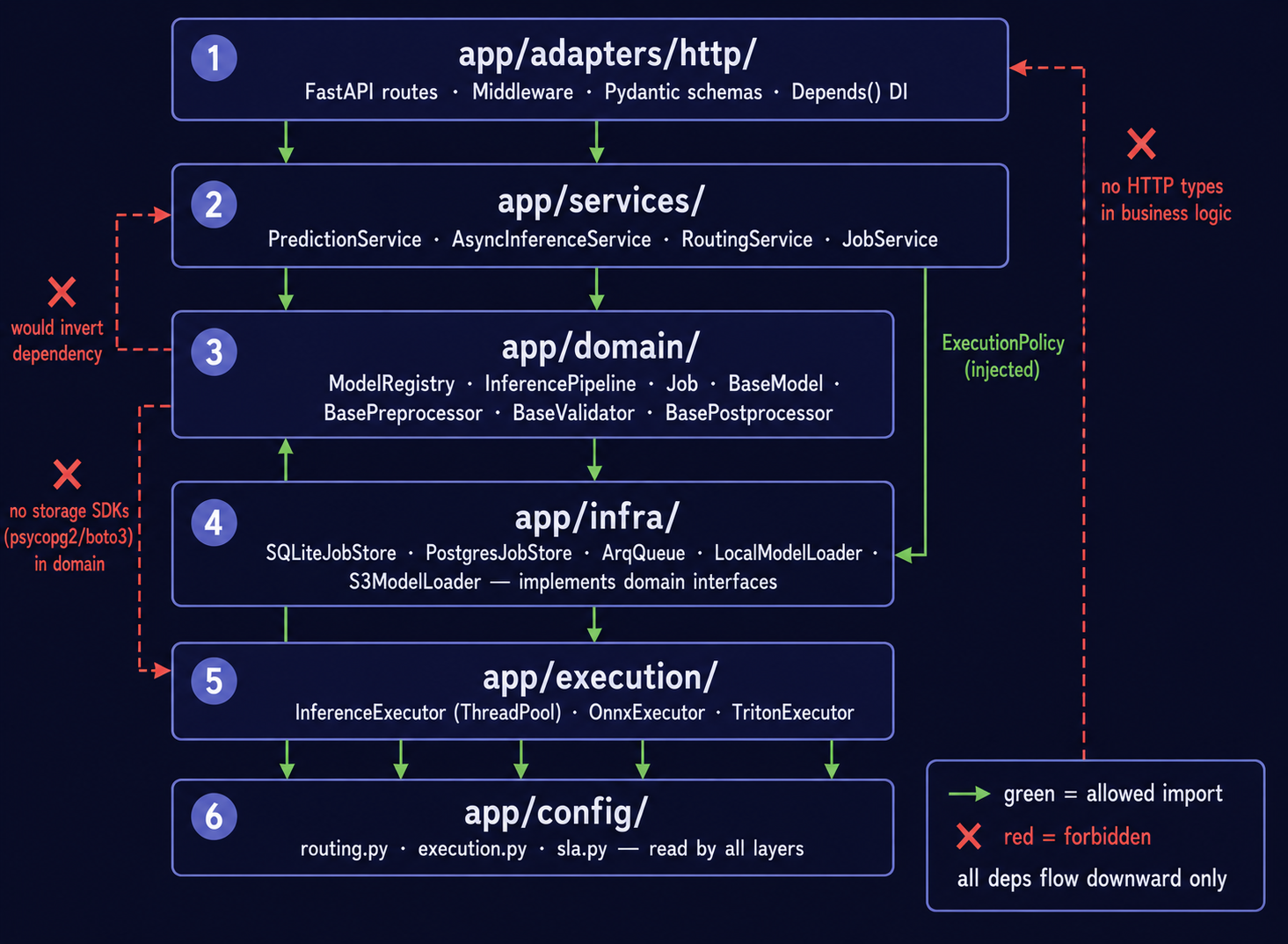
- No upward imports. Domain never imports from services or adapters. Services never import from adapters.
- No HTTP in domain or services.
fastapi,starlette,pydanticare adapter-layer concerns only. - No storage SDKs in domain.
psycopg2,boto3,arqbelong ininfra/only. - Explicit pipeline stages. Pre/postprocessing are separate classes, never hidden inside
model.predict(). - Every request creates a job. Sync and async paths both write a
Jobrecord — full audit trail. - Version is always explicit at execution time. Routing resolves
Noneto a concrete version before any pipeline is touched.
Detailed Architecture
Dependency injection
All shared singletons (registry, executors, services, job store) are constructed once via @lru_cache providers in app/adapters/http/deps.py and wired into route handlers via FastAPI's Depends().
The lifespan hook in app/adapters/http/app.py runs at startup to warm up all pipelines and connect the arq queue if REDIS_URL is set. On shutdown it drains all in-flight executor threads before the process exits.