Inference Pipeline
Files: app/domain/pipelines/base.py, app/domain/models/, app/domain/processing/, app/domain/validation/
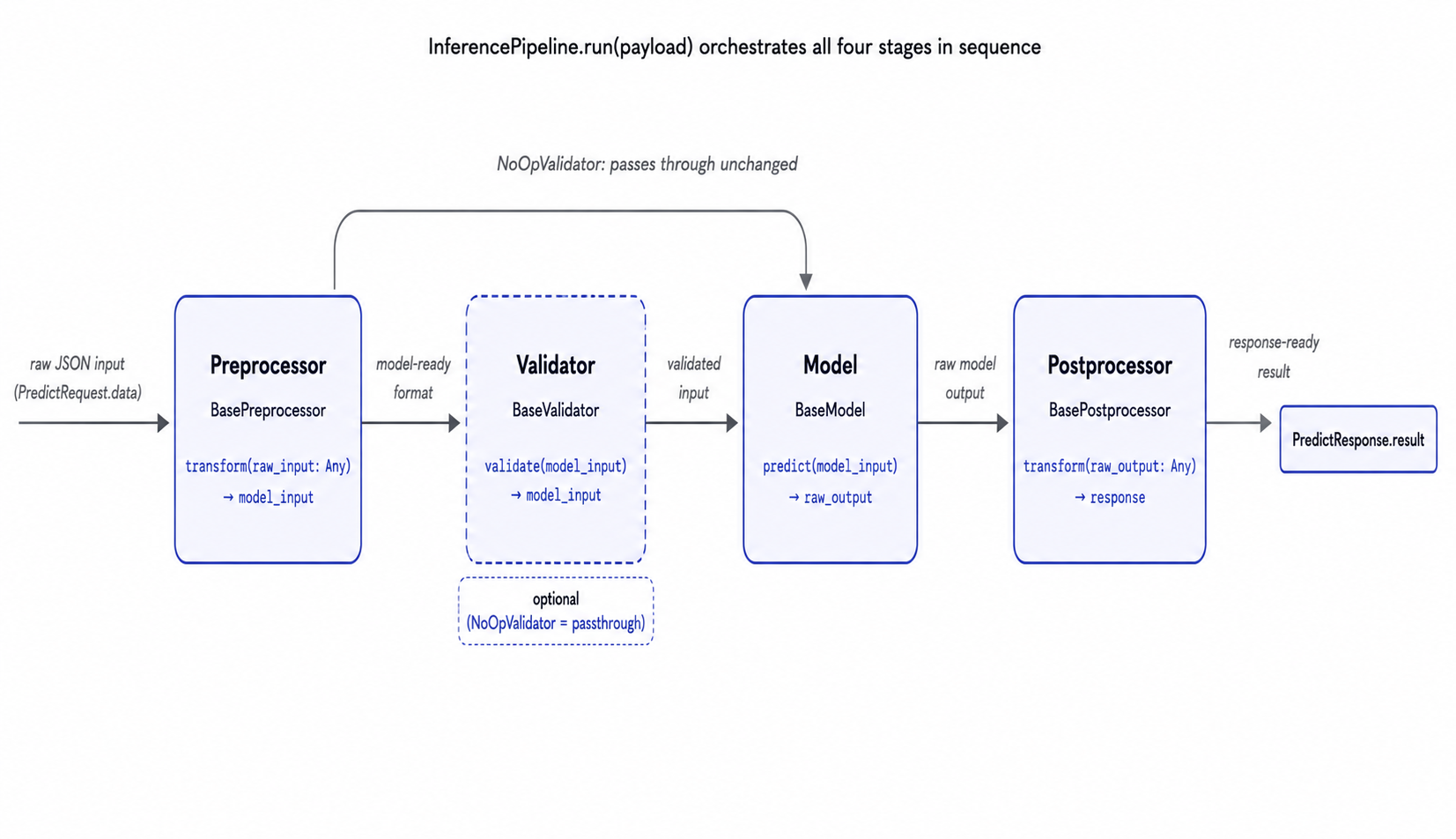
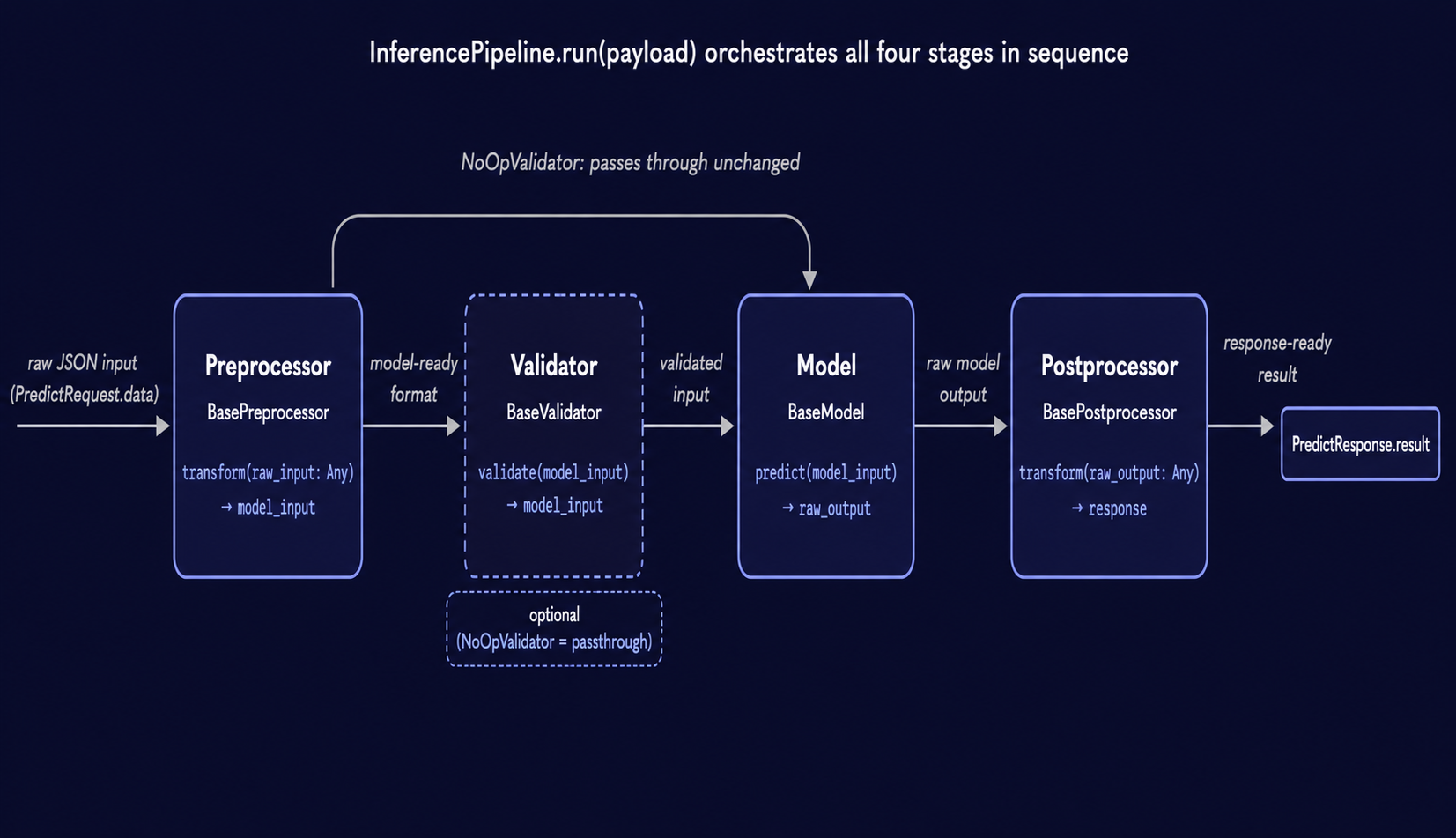
The pipeline is the unit of inference. It composes four components into a single run() call.
Execution order
BaseModel
class BaseModel(ABC):
    def load(self) -> None: ...          # called once at startup
    def predict(self, x: Any) -> Any: ...
    def predict_batch(self, xs) -> list: ...  # default: loops predict()
load()is called exactly once before anypredict()call.predict()receives the output of the preprocessor — not raw JSON.- Override
predict_batch()for vectorised or GPU-batched inference.
Preprocessor / Postprocessor
class BasePreprocessor(ABC):
    def transform(self, raw_input: Any) -> Any: ...

class BasePostprocessor(ABC):
    def transform(self, model_output: Any) -> Any: ...
Use IdentityPreprocessor / IdentityPostprocessor when no transformation is needed.
Validator
class BaseValidator(ABC):
    def validate(self, model_input: Any) -> None: ...  # raise ValidationError on failure
Validators run on the preprocessed input. ValidationError propagates as HTTP 400. Omitting validator defaults to NoOpValidator.
InferencePipeline
class InferencePipeline:
    def __init__(
        self,
        preprocessor: BasePreprocessor,
        model: BaseModel,
        postprocessor: BasePostprocessor,
        validator: BaseValidator | None = None,
    ): ...

    def run(self, raw_input: Any) -> Any: ...
    def run_batch(self, raw_inputs) -> list: ...
One pipeline instance is created per (model, version) and reused for all requests.